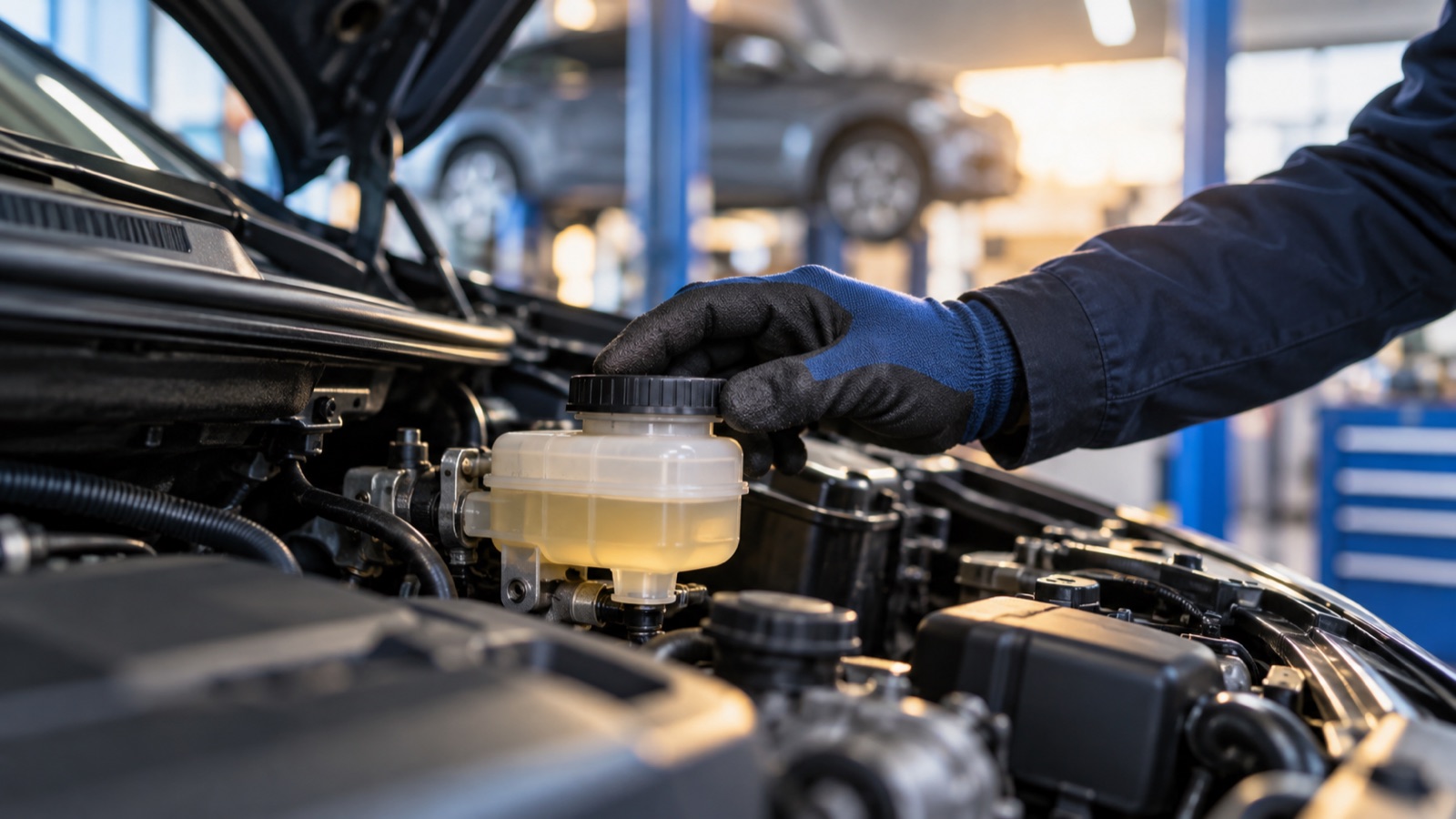
Optimum braking: when should you change your brake fluid? 🚗🔧
Your braking system is one of the most important elements of vehicle safety. All its components, including the fluid, need regular inspection and maintenance for optimum performance. Do you know when and why to change brake fluid? This page explains the importance of this maintenance and the signs that fluid replacement may be needed.
1. Why does brake fluid need replacing? ⚠️
Brake fluid transmits pedal pressure to the braking components. It must remain effective and stable for the brakes to perform correctly. Over time, however, it can degrade and lose its properties. Regular replacement is important for the following reasons:
- Moisture absorption : Glycol-based brake fluid absorbs moisture over time, reducing its heat resistance and potentially contributing to braking problems.
- Wear of internal components : Excessively old or dirty fluid can contribute to wear in brake cylinders and lines.
- Lower boiling point : Moisture lowers the boiling point of glycol-based fluid, allowing vapour to form during heavy braking and reducing braking effectiveness.
2. Signs that your brake fluid needs attention 🔍
Several symptoms can indicate a brake fluid problem, although other braking faults can cause them too. The most common include:
1. A soft or spongy pedal 🚙
A soft or spongy pedal may indicate degraded fluid or air in the system. Contaminated or old fluid can contribute to pressure transmission problems and reduced braking effectiveness. Have the cause checked professionally.
2. Less responsive braking ⏳
If the brakes respond more slowly or require greater pedal effort, degraded fluid may be one possible cause. It can affect the system’s ability to transmit pressure effectively.
3. Longer stopping time ⏱️
If the vehicle takes longer to stop, have the braking system inspected, including the fluid. Replace it if needed; do not assume fluid replacement alone will resolve the fault.
4. Abnormal brake pad wear 🛑
Excessive or uneven pad wear requires inspection of the entire braking system. Fluid condition may be part of the assessment, but sticking components and other faults must also be investigated.
5. Checking the fluid 🔬
Fluid appearance can provide clues: fresh glycol-based fluid is usually clear or lightly amber, while ageing and contamination can darken it. Dark or unusual-looking fluid warrants inspection, but colour alone cannot establish its condition or suitability.
3. Recommended replacement frequency 🗓️
There is no universal interval. One commonly cited guideline is to change brake fluid every 2 years or every 40 000 to 50 000 km, depending on use. The actual interval varies with the vehicle, driving conditions and, above all, the manufacturer’s instructions.
- High-performance vehicles : A sports car or heavily used 4x4 may need more frequent fluid servicing because of greater braking demands.
- Driving conditions : Extreme heat or frequent heavy braking, such as mountain driving, calls for closer attention to fluid condition.
4. The brake fluid replacement process 🛠️
Changing brake fluid requires precision and the correct procedure for safe braking. The following is an overview, not a workshop instruction; have the work performed by a qualified professional following the vehicle’s procedure.
- Checking the fluid level : The reservoir level is checked before replacement. A low level can indicate a leak and its cause must be established.
- Bleeding the braking system : The old fluid is replaced and air is removed using the vehicle-specific bleeding procedure.
- Replacing the fluid : Fresh fluid meeting the vehicle manufacturer’s exact specifications is used to replace the old fluid.
- Checking the brakes : After replacement, the system must be checked for correct operation and proper pressure transmission before returning the vehicle to use.
5. Why choose high-performance brake fluid? 🚀
Quality fluid helps maintain braking performance and system service life. High-performance classes such as DOT 5.1 or DOT 4can offer high boiling points, but they are different formulations and must only be used when specified for the vehicle. Performance alone does not establish compatibility.
Benefits of a suitable high-performance fluid :
- Consistent braking response : Suitable fluid maintains pressure transmission within the system’s specified temperature and viscosity requirements.
- Preventing premature wear : Quality fluid helps protect internal components, including cylinders, against corrosion and deterioration.
- Resistance to overheating : Higher boiling points provide greater resistance to vapour formation in demanding driving conditions.
Brake fluid is essential to vehicle safety and performance. Check its condition regularly and replace it at the specified intervals to reduce the risk of failure. If any of the symptoms above appear, stop using the vehicle if braking is impaired and arrange professional inspection; a fluid change alone may not resolve the cause.
Fresh, suitable quality brake fluid supports both safe driving and the braking system’s service life.