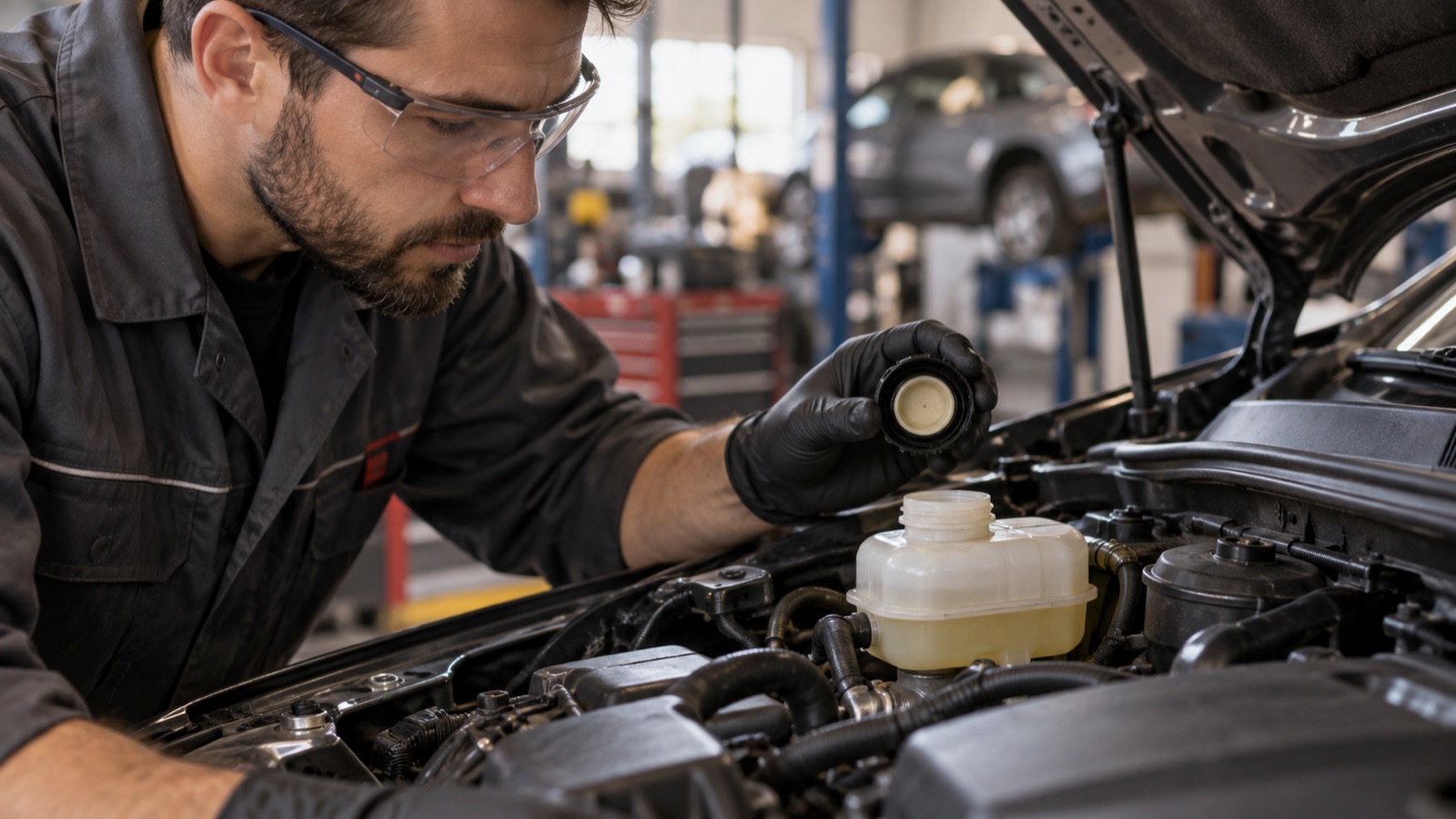
Why is choosing the right brake fluid crucial to your safety? 🛑🔧
Your vehicle’s braking system is one of the most important elements for road safety. Choosing suitable brake fluid and maintaining it regularly are central to its operation. Why is brake fluid so important, and how can you keep the system effective and reliable? This page explains why the choice matters and how it affects your safety on the road.
1. The vital role of brake fluid 🚗⚙️
Brake fluid is at the heart of braking. It transmits the force you apply to the pedal throughout the system to stop the vehicle. It must also withstand heat, protect metal components and help prevent malfunctions.
The main functions of brake fluid:
- Force transmission : Brake fluid transmits pedal pressure to the brake cylinders, initiating braking.
- Temperature resistance : It must withstand heat transmitted from braking components without boiling; it is not a cooling fluid for the discs.
- Corrosion protection : Brake fluid helps prevent rust and wear inside metal components, extending the braking system’s service life.
Why is quality fluid essential?
Poor-quality or degraded brake fluid can cause braking system failure or even a complete loss of braking effectiveness, increasing the risk of an accident.
2. The dangers of unsuitable or degraded brake fluid ⚠️💥
Using fluid that is unsuitable for your vehicle or failing to replace it regularly involves several risks. Degraded or poor-quality fluid can cause the following problems:
1. Reduced braking performance
Degraded fluid loses effectiveness and can contribute to a spongy pedal or slower braking response. In an emergency, this loss of performance can compromise your safety.
2. Risk of overheating
Old brake fluid is more prone to overheating under demanding conditions, such as repeated or prolonged braking. Overheating can cause braking failure, sometimes experienced as a soft pedal or ineffective braking.
3. Vapour formation in the fluid
At excessive temperatures, brake fluid can form vapour bubbles. Unlike liquid, these bubbles compress, preventing effective force transmission. Braking may become less responsive and stopping distances may increase.
4. Internal corrosion
Moisture in the fluid can corrode internal parts, causing premature wear and reducing system reliability.
3. Choosing the right brake fluid: DOT standards 📏🧪
Brake fluids are classified according to performance and chemical composition. DOT (Department of Transportation) standards define fluid categories. Each class has specifications covering heat resistance, moisture-related properties and overall performance; the vehicle manufacturer determines which is suitable.
The main brake fluid standards:
- DOT 3 : Glycol-based fluid with lower heat resistance, mainly used in older or basic vehicles where specified.
- DOT 4 : It offers greater heat resistance than DOT 3 and is used in many modern vehicles, subject to their specifications.
- DOT 5 : Silicone-based fluid for systems specifically designed for it. It is stable at high temperatures and does not absorb moisture.
- DOT 5.1 : High-performance fluid for vehicles requiring greater heat resistance and stability under demanding driving conditions.
When is DOT 5 Brake Fluid a suitable choice?
The DOT 5 Brake Fluid is designed for demanding conditions, but only for a braking system approved for silicone fluid. High ambient temperatures or a high-performance vehicle alone are not reasons to switch to this fluid.
4. When and why should brake fluid be replaced? ⏰🔄
Even high-quality brake fluid ages. Regular replacement is essential to reduce the risk of failure.
Signs that replacement is needed :
- Soft or spongy brake pedal : Reduced pedal response or needing more pressure may indicate degraded fluid or a low level. These symptoms require professional inspection.
- Overheating brakes : Less effective braking, particularly after prolonged driving, may be linked to overheated or degraded fluid.
- Moisture contamination : Glycol-based brake fluid absorbs moisture from the air, reducing its performance. Old fluid may contain excessive moisture and need replacing.
Recommendation : A typical reference is every 2 years or every 40 000 to 60 000 km, but follow the manufacturer’s instructions. A compatible high-performance fluid, such as DOT 5 Brake Fluid, can offer durability and moisture-related protection in systems approved for it.
5. How can you maintain braking performance? 🔧🛠️
The following practices help maintain braking performance over time:
1. Check the brake fluid level regularly
Check that the fluid remains at the correct level. A low level can compromise braking and should be investigated rather than simply topped up without finding the cause.
2. Choose high-quality products
Choose suitable products such as DOT 5 Brake Fluid that are formulated for high performance, particularly where high-temperature braking specifications are required and the vehicle manufacturer approves them.
3. Replace brake fluid regularly
Do not overlook replacement intervals. Regular fluid maintenance helps keep the system functioning correctly and supports safe braking.
Choosing and maintaining brake fluid are crucial for vehicle safety. Quality fluid supports effective braking, corrosion protection and resistance to heat. When choosing a product such as DOT 5 Brake Fluid, confirm compatibility first. Do not leave braking safety to chance: look after the system and have any abnormal braking checked professionally.